Bitmain Antminer HS3
|
ASIC Model series:
|
ASIC Release: |
Hashrate:
|
ASIC Power:
|
|
ASIC Algo:
|
 Bitmain Antminer HS3 Bitmain Antminer HS3 |
Sep 2024 |
9Th/s
|
2079W
|
 |
Handshake
|
Modified ASIC Firmware for Antminer HS3
(10-15% improvement) download here
Handshake Mining Algorithm & ASIC Antminer HS3
The Handshake mining algorithm represents a unique Proof-of-Work (PoW) approach focused on decentralized domain name ownership rather than traditional smart contracts or payment systems. As the Handshake network matured, mining transitioned from GPU-dominated setups to specialized ASIC miners, with the Bitmain Antminer HS3 ASIC becoming the most powerful and efficient solution available for this algorithm.
This article provides a complete overview of the Handshake algorithm, the economics behind Handshake mining, supported coins, difficulty behavior, mining pools, and a full technical analysis of the Antminer HS3 ASIC, including real-world user experience and long-term viability.
What Is the Handshake Mining Algorithm?
The Handshake algorithm is a Proof-of-Work consensus mechanism designed specifically for the Handshake (HNS) blockchain. Unlike most PoW networks, Handshake’s primary purpose is not financial transactions but the decentralization of the Domain Name System (DNS).
Handshake uses a PoW algorithm based on SHA3-derived cryptographic primitives, optimized for verification efficiency and predictable block production. Mining secures the network and ensures fair distribution of domain name ownership rights.

Handshake Algorithm Explained – Antminer HS3 ASIC Specs, Mining and Profitability
Design Goals of the Handshake Algorithm
Before ASIC miners appeared, Handshake mining was accessible to GPU miners. However, the algorithm was never explicitly designed to resist ASICs.
The core goals of the Handshake algorithm include:
-
Strong network security
-
Predictable block timing
-
Fair coin distribution
-
Efficient verification
-
Long-term protocol stability
Because ASIC resistance was not a priority, specialized hardware quickly became dominant.
Cryptocurrency Mined With the Handshake Algorithm
The Handshake algorithm is extremely specialized and supports only one primary blockchain.
Handshake-Based Coin
-
Handshake (HNS) – native coin used for decentralized DNS auctions and transactions
This single-coin focus means Handshake ASIC miners are tightly coupled to the success of the HNS ecosystem.
Handshake Network Difficulty & Mining Economics
Handshake difficulty adjusts automatically based on total network hash rate. When ASIC miners such as the Antminer HS3 entered the network, difficulty increased sharply, making GPU mining obsolete.
Key economic factors influencing Handshake ASIC mining include:
-
HNS market price
-
Block reward emissions
-
Electricity costs
-
ASIC efficiency (J/TH)
-
Pool fees and payout models
Due to the limited scope of Handshake, profitability is highly sensitive to both HNS price movements and mining difficulty changes.
Handshake Mining Pools for ASIC Miners
Before deploying ASIC hardware, miners must choose stable and reputable mining pools that support Handshake.
Popular Handshake Mining Pools
-
F2Pool (Handshake)
-
PoolFlare
-
DxPool
-
HandyPool
Pool selection directly impacts payout stability, latency, and transparency.
Introduction to Antminer HS3 ASIC Miner
The Bitmain Antminer HS3 ASIC is a next-generation Handshake mining machine designed for maximum hash rate and industrial-scale efficiency. It replaced earlier models such as the HS1 and HS2, setting a new performance standard for Handshake mining.
The HS3 is engineered as a single-algorithm ASIC, offering no flexibility but unmatched performance for HNS mining.
Antminer HS3 ASIC – Algorithm Support
The Antminer HS3 ASIC supports:
-
Handshake (HNS) mining algorithm only
It does not support SHA-256, Blake2b, or other PoW algorithms.
Antminer HS3 ASIC – Complete Technical Specifications
Before listing specifications, it is important to understand that the Antminer HS3 targets professional mining farms with sufficient power and cooling infrastructure.
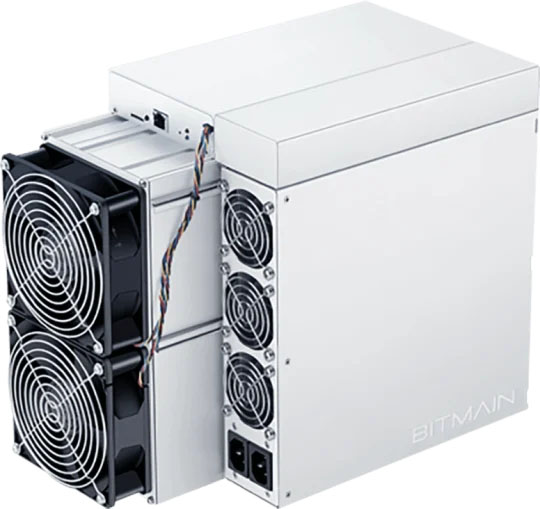 Antminer HS3
Full Technical Data – Antminer HS3 ASIC
-
Manufacturer: Bitmain
-
Model: Antminer HS3
-
Algorithm: Handshake
-
Hashrate: ~9.0 TH/s
-
Power Consumption: ~2079 W
-
Energy Efficiency: ~231 J/TH
-
Release Date: 2022
-
Cooling: Dual high-speed fans
-
Noise Level: ~75 dB
-
Input Voltage: 11.6 – 13.0 V
-
Network Connection: Ethernet
-
Operating Temperature: 5 – 40 °C
-
Humidity Range: 5 – 95%
At launch, the HS3 significantly outperformed previous Handshake ASIC miners in both raw hash rate and operational stability.
Power Consumption, Heat & Infrastructure Requirements
Running the Antminer HS3 ASIC requires careful planning, especially in larger deployments.
Operational considerations include:
-
Dedicated power circuits
-
Stable voltage supply
-
Adequate airflow and exhaust
-
Noise isolation
Due to noise and heat output, the HS3 is not suitable for home mining environments.
User Experiences With Antminer HS3
Feedback from mining communities and hosting providers highlights several consistent trends.
Positive User Feedback
-
Very stable hash output
-
Easy configuration
-
Predictable earnings
-
Strong build quality
Negative User Feedback
-
Single-coin dependency
-
ROI sensitive to HNS price
-
Limited resale market
-
High upfront investment
Most professional miners view the HS3 as a long-term infrastructure investment rather than a short-term ROI machine.
Longevity, Repairability & Resale Value
Bitmain provides a standard 180-day manufacturer warranty for the Antminer HS3. After warranty expiration, third-party repair services become essential.
Factors influencing longevity and resale value include:
-
Hash board repair availability
-
Firmware updates
-
Handshake network adoption
-
DNS market demand
The HS3 retains value better than earlier Handshake ASICs due to its efficiency advantage.
Is Handshake ASIC Mining Still Viable?
Handshake ASIC mining remains viable under specific conditions:
-
Low electricity costs
-
Long-term belief in decentralized DNS
-
Use of modern ASIC hardware
-
Participation in reliable mining pools
However, the single-coin nature of Handshake mining increases financial risk, making diversification important.
The Handshake mining algorithm powers a unique blockchain focused on decentralized internet infrastructure rather than traditional finance. The Bitmain Antminer HS3 ASIC stands as the most powerful and efficient solution for Handshake mining, offering industrial-grade performance and stability.
For miners who understand the risks of single-algorithm ASIC mining and believe in the long-term value of Handshake, the HS3 remains a viable and professional-grade mining option.