Bitcoin Bitmain Antminer T21
|
ASIC Model series:
|
ASIC Release: |
Hashrate:
|
ASIC Power:
|
|
ASIC Algo:
|
 Bitmain Antminer T21 Bitmain Antminer T21 |
Apr 2024 |
180 Th/s
|
3420W
|
 |
SHA-256
|
|
Bitmain Antminer T21 |
Feb 2024 |
190 Th/s
|
3610W
|
|
SHA-256
|
Modified ASIC Firmware for Antminer T21 series
(10-20% improvement) download here
SHA‑256 Bitcoin Mining - ASIC Antminer T21
Bitcoin SHA‑256 (Secure Hash Algorithm 256‑bit) is a cryptographic hash function originally designed by the NSA and is widely used in blockchain consensus. It forms the backbone of Bitcoin’s proof‑of‑work (PoW) mechanism. In mining, SHA‑256 enables miners to solve complex mathematical problems that secure the network and validate transactions.
In simple terms, mining Bitcoin SHA‑256 involves repeatedly hashing data until a hash below a target threshold is found. This requires tremendous computational power, which is delivered by specialized hardware such as ASICs (Application‑Specific Integrated Circuits).
Before outlining the most powerful SHA‑256 miners like the Antminer T21, let’s first explore the fundamentals of Bitcoin SHA‑256 mining: how it works, why it’s important, and the coins that use it.
What (Bitcoin) Coins Are Mined with SHA‑256
Mining with SHA‑256 is not limited to Bitcoin. Several other cryptocurrencies use the SHA‑256 algorithm:
-
Bitcoin (BTC)
-
Bitcoin Cash (BCH)
-
Bitcoin SV (BSV)
-
Peercoin (PPC)
-
eCash (XEC)
These coins share similar mining mechanics because they rely on SHA‑256 hashing power. Bitcoin remains the most valuable and most mined among them, while Bitcoin Cash and Bitcoin SV exist as forked chains with differing protocols and usage.
SHA‑256 Bitcoin Mining with T21 Works
To understand SHA‑256 mining, it’s important to know what miners actually do:
-
Perform millions of hash calculations per second
-
Try to find a hash that meets the network’s difficulty target
-
Upon success, broadcast the block to the network
-
Receive block rewards and transaction fees
Mining difficulty is self‑adjusting—every ~2016 blocks (approximately every two weeks) in Bitcoin—to maintain a consistent block time of ~10 minutes. When more hash power enters the network, difficulty rises; if miners leave, it drops.
Bitcoin Mining Difficulty
Mining difficulty tracks how hard it is to find a valid block hash.
SHA‑256 difficulty changes dynamically based on:
-
Total network hash rate
-
Number of miners active on the network
-
Recent block times
A higher Bitcoin difficulty means more computational power is needed, which puts pressure on miners to optimize for efficiency (hash rate per watt of power). ASICs like the Bitmain Antminer T21 are designed specifically to push large amounts of SHA‑256 hash power while conserving energy compared to GPUs or CPUs.
Bitcoin Mining Pools for SHA‑256 Coins
Joining a Bitcoin mining pool increases the likelihood of consistent rewards compared to solo mining. Pools aggregate hash power from many miners and distribute payouts proportional to contributed work.
Some of the most popular SHA‑256 mining pools include:
-
Antpool
-
Slush Pool
-
F2Pool
-
ViaBTC
-
BTC.com
Each pool has its own fee structure, payout schemes (PPS, PPLNS, PPS+), and regional variations. Experienced miners often choose pools based on fee cost, reliability, and payout frequency.
Bitcoin Bitmain Antminer T21 Series
The Bitcoin ASIC Bitmain Antminer T21 family represents one of the latest ASIC lines focused on SHA‑256 mining. Bitmain, headquartered in China, has been a dominant manufacturer of ASIC mining hardware for years.
The ASIC Antminer T21 series aims to balance:
-
High hash rate
-
Competitive energy efficiency
-
Durability and long‑term operation
Before diving into tech specs, let’s understand how T21 compares with other Antminer models.
Bitmain Antminer T21 Models
Bitmain releases miners with variants optimized for performance and efficiency. Here are the typical specs you’ll find in the Antminer T21 lineup:
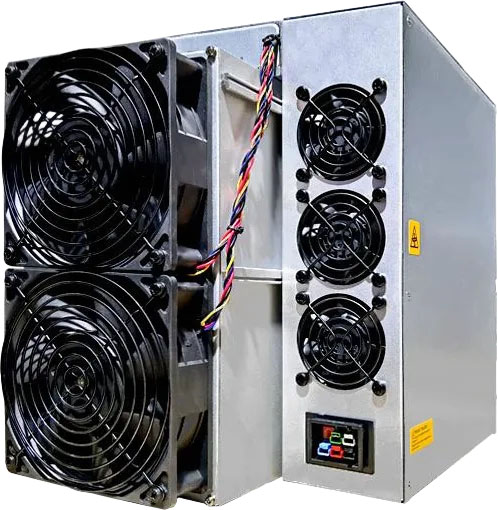
Bitmain Antminer T21 Technical Overview
-
Algorithm: SHA‑256
-
Hash Rate: ~85 TH/s to 100 TH/s (depending on model)
-
Power Consumption: ~3000W to 3350W
-
Release Date: 2024–2025 cycles
-
Energy Efficiency: ~31 J/TH – 35 J/TH
-
Cooling: Dual fans, optimized airflow
Hash rate and efficiency may vary depending on firmware and environmental conditions (temperature, voltage).
Higher hash rate means more chances of finding a valid hash, while lower power consumption translates into lower electricity costs—critical for miners running at scale.
Power Consumption and Efficiency Bitcoin mining
Electricity cost is one of the largest expenses for mining operations. To calculate profitability, miners often track:
Power Consumption × Electricity Price ÷ Mining Rewards
For example, if a miner draws 3200W and electricity costs $0.10 per kWh, daily power cost alone is:
3.2 kW × 24 hours × $0.10 ≈ $7.68
Miners therefore look for machines that provide the highest hash rate per watt to maximize profits.
User Experiences Bitcoin T21 Mining
The Antminer T21 receives mixed but generally positive feedback across forums like BitcoinTalk, Reddit, and mining groups on social media. Common themes include:
-
Performance Reliability: Many users report consistent hash rates near advertised figures when properly ventilated.
-
Noise Levels: Like most ASICs, T21 units are loud and require dedicated mining space or sound dampening.
-
Heat Output: Effective cooling is critical; improper air flow can lead to overheating.
-
Firmware Tweaks: Some miners custom‑tune firmware to improve efficiency, but this can risk hardware stability.
Issues and Common Discussions Around Bitmain Antminer T21
Miners frequently discuss the following issues online:
-
Warranty Claims and RMA Problems: Some users report delays or challenges when returning defective units, depending on the reseller.
-
Power Spikes: Occasional voltage fluctuations can trip circuits if mining rigs aren’t powered correctly.
-
Scalability Influences Profitability: As more T21 miners join pools, network difficulty increases, lowering per‑unit revenue.
-
Firmware Updates: Users discuss the impact of official vs custom firmware on hash rate stability.
Overall, feedback tends toward “solid mid‑range SHA‑256 performance,” though debate continues about long‑term efficiency vs newer models.
Best Practices for Bitmain Antminer T21 Setup
Setting up an Antminer T21 should follow these steps:
Before listing the steps, here is a quick overview of what needs to be done during setup:
-
Ensure proper electrical supply with surge protection
-
Connect to a reliable mining pool
-
Monitor temperature and humidity
-
Update to stable firmware if needed
Here are the recommended setup steps:
-
Prepare a dedicated power circuit rated for at least 3500W
-
Mount the miner in a cool, well‑ventilated location
-
Connect Ethernet and configure network settings
-
Access the miner interface via browser
-
Select preferred mining pool and enter credentials
-
Monitor hashrate, power draw, and reject rate
Proper deployment ensures optimal performance and longer hardware life.
Bitcoin Mining Profitability T21
Profitability depends on:
-
Hash rate
-
Electricity costs
-
Mining difficulty
-
Market price of mined coins
-
Pool fees
Tools such as crypto mining profitability calculators can estimate returns based on current network conditions.
Future of SHA‑256 Bitcoin Mining and Antminer T21
Bitcoin SHA‑256 mining remains competitive. As difficulty increases and block rewards halve periodically (for Bitcoin every ~4 years), miners must constantly improve efficiency. The ASIC Antminer T21 series represents a strong offering — but efficiency gains from newer models are likely to continue.
The ASIC Bitmain Antminer T21 stands as a capable Bitcoin SHA‑256 miner designed for miners who want competitive hash power with reasonable energy efficiency. When paired with the right pool, electricity pricing, and environment, T21 miners can contribute to stable mining operations.