Bitmain Antminer K7, K5
|
ASIC Model series:
|
ASIC Release: |
Hashrate:
|
ASIC Power:
|
|
ASIC Algo:
|
 Bitmain Antminer K7 Bitmain Antminer K7 |
Jan 2023 |
63.5Th/s
|
3080W
|
 |
Eaglesong
|
|
Bitmain Antminer K5 |
Apr 2020 |
1.13Th/s
|
1580W
|
|
Eaglesong
|
Modified ASIC Firmware for Antminer K series
(22-28% improvement) download here
Eaglesong Mining Algorithm & ASIC Antminer K7 and K5
The Eaglesong mining algorithm is a Proof-of-Work (PoW) hashing algorithm primarily associated with the Nervos Network (CKB). While initially designed to favor GPU mining, Eaglesong eventually became dominated by ASIC miners, most notably Bitmain’s Antminer K5 and Antminer K7.
This article provides a complete technical and practical overview of the Eaglesong algorithm, supported cryptocurrencies, network difficulty behavior, and an in-depth analysis of the Antminer K5 ASIC and Antminer K7 ASIC, including specifications, power efficiency, user experience, and long-term mining viability.
Eaglesong Mining Algorithm?
The Eaglesong algorithm is a cryptographic hash function developed specifically for the Nervos CKB blockchain. Its design emphasizes fast verification, simple structure, and low overhead, making it suitable for high-throughput blockchains.
Eaglesong is not a general-purpose hashing algorithm like SHA-256. Instead, it was created as a custom PoW solution tightly integrated with Nervos’ layered architecture and economic model.
Goals of Eaglesong
Before ASIC miners appeared, Eaglesong was marketed as a GPU-friendly algorithm. However, like many PoW designs, it eventually proved vulnerable to specialized hardware.
The algorithm was intended to provide:
-
High performance with simple logic
-
Resistance to extreme centralization
-
Predictable block times
-
Efficient verification for light clients
Despite these intentions, ASIC optimization quickly overtook GPU mining, reshaping the Eaglesong ecosystem.

BitmainAntminer K5 and K7 Eaglesong ASIC Mining
Cryptocurrencies Using the Eaglesong Algorithm
Eaglesong has a much narrower adoption compared to algorithms like SHA-256 or Equihash. This specialization directly influences ASIC miner economics and long-term relevance.
Primary Eaglesong-Based Coin
-
Nervos Network (CKB) – the dominant and practically exclusive Eaglesong PoW coin
Because Eaglesong is tightly coupled with Nervos, ASIC miners designed for Eaglesong are effectively single-coin devices.
Eaglesong Network Difficulty
Eaglesong difficulty adjusts dynamically based on total network hash power. The introduction of Antminer K5 and later Antminer K7 caused massive jumps in difficulty, rapidly pushing GPU miners out of profitability.
Economic factors influencing Eaglesong ASIC mining include:
-
CKB market price
-
Block reward schedule
-
Electricity cost per kWh
-
ASIC efficiency and uptime
-
Pool fee structure
Due to limited coin diversity, Eaglesong ASIC profitability is highly sensitive to Nervos Network conditions.
ASIC Mining Pools for Eaglesong (CKB)
Before deploying ASIC hardware, miners must select reliable pools with sufficient hash power distribution.
Popular Eaglesong / CKB Mining Pools
-
F2Pool
-
Poolin (historical support)
-
DxPool
-
AntPool
Pool choice impacts payout consistency, latency, and operational transparency.
Antminer K-Series ASIC Miners
Bitmain’s Antminer K-series ASIC miners were specifically engineered for the Eaglesong algorithm. Unlike repurposed ASIC designs, these miners use custom chips optimized exclusively for CKB mining.
The K-series represents Bitmain’s strategy of building single-algorithm, high-efficiency ASIC devices for niche PoW ecosystems.
Antminer K5 ASIC
The Antminer K5 ASIC was Bitmain’s first mass-produced Eaglesong miner and marked the beginning of ASIC dominance on the Nervos Network.
Before reviewing the specifications, it’s important to note that the K5 was designed during an early stage of Eaglesong mining, where efficiency gains were still moderate compared to later generations.
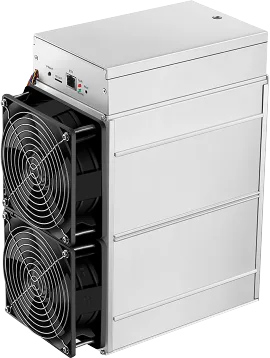
Bitmain Antminer K5
-
Manufacturer: Bitmain
-
Model: Antminer K5
-
Algorithm: Eaglesong
-
Hashrate: ~1130 GH/s (1.13 TH/s)
-
Power Consumption: ~1580 W
-
Energy Efficiency: ~1.4 J/GH
-
Release Date: 2020
-
Cooling: Dual high-speed fans
-
Noise Level: ~75 dB
-
Input Voltage: 11.6 – 13.0 V
-
Network Interface: Ethernet
-
Operating Temperature: 5 – 40 °C
The K5 offered a massive performance advantage over GPUs but was quickly surpassed by newer ASIC generations.
Antminer K7 ASIC
The Antminer K7 ASIC represents a major generational leap in Eaglesong mining. Designed for industrial-scale mining, the K7 dramatically increased network difficulty upon release.
Before listing the specifications, it’s crucial to understand that the K7 targets professional mining farms with access to low-cost electricity and advanced cooling.

Bitmain Antminer K7
-
Manufacturer: Bitmain
-
Model: Antminer K7
-
Algorithm: Eaglesong
-
Hashrate: ~63.5 TH/s
-
Power Consumption: ~3080 W
-
Energy Efficiency: ~0.049 J/GH
-
Release Date: 2022
-
Cooling: Dual high-performance fans
-
Noise Level: ~75–78 dB
-
Input Voltage: 11.6 – 13.0 V
-
Network Interface: Ethernet
-
Operating Temperature: 5 – 45 °C
The efficiency improvement over the K5 is extreme, rendering earlier Eaglesong ASICs largely uncompetitive.
Power Consumption, Heat & Infrastructure Requirements ASIC K5, K7
Both Antminer K5 and K7 require careful infrastructure planning. High power density and constant operation place demands on electrical and cooling systems.
Operational considerations include:
-
Industrial-grade power circuits
-
Stable voltage delivery
-
Forced airflow or immersion cooling
-
Noise isolation for residential environments
The Antminer K7, in particular, is unsuitable for home mining due to power and noise constraints.
User Experiences With Antminer K5 and K7
Community feedback from mining forums and hosting providers shows consistent patterns.
Positive Feedback
-
Extremely stable hash output
-
Minimal tuning required
-
Predictable earnings
-
High build quality
Negative Feedback
-
Single-coin dependency
-
Rapid obsolescence of older models
-
High upfront investment
-
Strong sensitivity to CKB price movements
Professional miners generally favor the K7 due to its superior efficiency and longer competitive lifespan.
Longevity, Repairability & Resale Value ASIC miners
Bitmain provides a standard 180-day warranty for K-series ASIC miners. After warranty expiration, miners rely on third-party repair services.
Key factors affecting long-term value:
-
Availability of hash board repairs
-
Firmware updates
-
Nervos Network roadmap
-
Secondary market demand
The Antminer K7 maintains significantly better resale value than the K5 due to its efficiency advantage.
Is Eaglesong ASIC Mining Still Viable?
Eaglesong ASIC mining can still be profitable under specific conditions:
-
Low electricity cost
-
Long-term confidence in Nervos Network
-
Access to modern ASIC hardware
-
Efficient pool selection
However, due to the single-coin nature of Eaglesong, risk management is critical.
The Eaglesong mining algorithm represents a highly specialized PoW ecosystem dominated by ASIC miners. Bitmain’s Antminer K5 introduced ASIC mining to Nervos, while the Antminer K7 redefined performance and efficiency.
For miners willing to accept single-coin exposure and infrastructure requirements, Eaglesong ASIC mining remains a viable—but high-risk—strategy.