Legacy Bitmain Antminers for SHA-256
|
ASIC Model series:
|
ASIC Release: |
Hashrate:
|
ASIC Power:
|
|
ASIC Algo:
|
 Bitmain Antminer S17 Bitmain Antminer S17(17+, 17e, 17Pro) |
2019 |
50-73Th/s
|
1975 W
2920 W |
 |
SHA-256
|
|
Bitmain Antminer T17 (17e, 17+) |
2019 |
40-64Th/s
|
2200 W
3200 W |
|
SHA-256
|
|
Bitmain Antminer S15 |
2018 |
28Th/s
|
1596 W
|
|
SHA-256
|
|
Bitmain Antminer T15 |
2018 |
23Th/s
|
1541 W
|
|
SHA-256
|
|
Bitmain Antminer S11 |
2018 |
20Th/s
|
1530 W
|
|
SHA-256
|
|
Bitmain Antminer S9 (9 SE, 9k, 9i, 9j, 9 Hydro) |
2017-2019 |
13-18Th/s
|
1127 W
1728 W |
|
SHA-256
|
|
Bitmain Antminer V9 |
2018 |
4Th/s
|
1027 W
|
|
SHA-256
|
|
Bitmain Antminer T9 |
2017-2018 |
10-12Th/s
|
1430 W
1576 W |
|
SHA-256
|
|
Bitmain Antminer R4 |
2017 |
8.7Th/s
|
845 W
|
|
SHA-256
|
|
Bitmain Antminer S7 (7LN) |
2015-2016 |
2.7-4.7Th/s
|
697 W
1293 W |
|
SHA-256
|
|
Bitmain Antminer S5 |
2014 |
1.15Th/s
|
590 W
|
|
SHA-256
|
|
Bitmain Antminer S3 |
2014 |
0.47Th/s
|
366 W
|
|
SHA-256
|
Modified ASIC Firmware for Old Antminers
(5-30% improvement) download here
The Era of Classic Bitmain Antminers
Before today’s ultra-efficient ASIC miners dominated the SHA-256 landscape, Bitmain Antminers such as the S3, S5, S7, S9, T9, V9, S11, T15, S17, and T17 series defined entire mining generations. These machines powered the Bitcoin network during its most formative years and played a key role in decentralizing hash power worldwide.
This unified article explores when these miners were profitable, what they are still used for today, how custom firmware can revive them under cheap electricity, and what miners currently discuss about them on forums and social media.
The First Generation: Antminer S3 and S5
The Antminer S3 (2014) and Antminer S5 (2014–2015) represent Bitmain’s early ASIC breakthroughs. At the time, GPU mining was being rapidly displaced, and these units offered a massive leap in efficiency.

Antminer S3
They were profitable when:
-
Bitcoin difficulty was significantly lower
-
Block rewards were still 25 BTC
-
Electricity costs were less critical than hash power
Today, these miners are no longer profitable for Bitcoin mining under normal conditions. However, they are still used for:
-
Educational purposes
-
Home lab experiments
-
Demonstrations of SHA-256 mining principles
-
Very low-difficulty SHA-256 altcoin testing
On forums, miners often mention the S3 and S5 nostalgically, noting how small and simple they were compared to modern machines.
The Workhorse Era: Antminer S7
Released in 2015, the Antminer S7 was one of the most successful miners Bitmain ever produced. It offered strong efficiency gains and ran reliably for years.

Bitmain Antminer S7
The S7 remained profitable:
-
Until around 2017–2018
-
Especially in regions with low electricity costs
-
During Bitcoin’s price surge toward $20,000
Today, S7 miners are mostly:
-
Repurposed for test networks
-
Used for solo mining experiments
-
Occasionally profitable with free or near-free electricity
Miners on Reddit and BitcoinTalk often describe the S7 as “indestructible,” with many units still functioning after nearly a decade.
The Most Iconic Miner: Antminer S9 and Variants (T9, V9)
The Antminer S9 (2016) is widely considered the most famous SHA-256 miner ever built. With multiple variants (S9i, S9j, S9k), it dominated global hash rate for years.

Bitmain Antminer S9
Related models such as the T9 and V9 were:
-
Slightly less efficient
-
Marketed as budget or alternative options
-
Often built using lower-binned chips
When Were S9-Series Miners Profitable?
-
From 2016 to around 2020 for many operators
-
Longer in regions with electricity below $0.05/kWh
-
During bull markets and before major difficulty spikes
Why S9 Miners Still Matter Today
With custom firmware, S9 units can:
-
Undervolt chips
-
Reduce power consumption dramatically
-
Achieve better J/TH ratios than stock firmware
With electricity under ~$0.03/kWh, many miners report break-even or small profits, especially during BTC price increases.
On social media, the S9 is still called:
-
“The AK-47 of miners”
-
“Old, loud, but reliable”
Mid-Generation Transition: Antminer S11 and T15
The Antminer S11 (2018) and T15 (2018–2019) marked a transitional phase. These models aimed to improve efficiency without fully redesigning architecture.
They were profitable:
-
During 2018–2019
-
Mostly in professional mining farms
-
Often overshadowed by the S17 shortly after release
Today, these miners are:
-
Rarely used in large farms
-
Sometimes profitable with immersion cooling
-
Commonly discussed as “forgotten” models on forums
Miners often comment that these units suffered from poor timing rather than bad design.
The 7nm Generation: Antminer S17 and T17 Series
The S17 and T17 families (2019–2020) introduced 7nm chips and significant performance gains. However, they also became infamous for reliability issues.
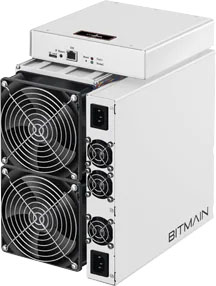
Bitmain Antminer T17
Common Models
-
S17, S17 Pro, S17+
-
T17, T17+, T17e
Profitability Period
-
Highly profitable during 2019–2021
-
Especially during the 2020–2021 bull market
-
Used heavily by industrial mining farms
Known Issues
-
Hashboard failures
-
Thermal stress
-
Voltage regulator problems
Despite these issues, miners still use them today with:
-
Custom firmware
-
Improved cooling
-
Reduced clock speeds
On forums, opinions are polarized:
-
Some call them “fire hazards”
-
Others say proper tuning makes them “hidden gems”
The Role of Custom Firmware in Reviving Old Antminers
Custom firmware has changed how miners view older hardware.
With custom firmware, miners can:
-
Undervolt chips safely
-
Reduce power draw by 15–30%
-
Improve stability
-
Extend hardware lifespan
This makes older Antminers potentially profitable when:
-
Electricity is extremely cheap
-
Heat can be reused (greenhouses, buildings)
-
Mining is done during off-peak energy hours
Today, this is one of the most discussed topics across mining forums and Telegram groups.
How Many Units Were Sold and Where They Went
While Bitmain has never released exact sales figures, industry estimates suggest:
-
Millions of S9 units were sold globally
-
Tens of thousands of S7 and S5 units
-
Large deployments in China, the USA, Russia, Kazakhstan, and Canada
Many older miners were:
-
Resold multiple times
-
Migrated between countries
-
Recycled or scrapped after profitability dropped
Some even re-entered service years later due to energy price fluctuations.
What Miners Discuss Today About These Models
On forums and social media, current discussions focus on:
-
Whether old miners still make sense in 2025+
-
Heat reuse as a hidden profitability factor
-
Repairing hashboards vs replacing units
-
Noise reduction and home mining legality
-
Nostalgia and comparisons with modern miners
Interestingly, many miners emphasize that knowledge and optimization now matter more than raw hardware power.
Do Old Antminers Still Have Value?
While classic Bitmain Antminers are no longer competitive at scale, they are far from useless. With the right conditions—cheap electricity, custom firmware, and creative deployment—they can still generate value, knowledge, and even modest profits.
These machines remain an essential part of Bitcoin mining history and continue to shape discussions about decentralization, sustainability, and efficiency.