Bitmain Antminer KS7, KS5, KS3
|
ASIC Model series:
|
ASIC Release: |
Hashrate:
|
ASIC Power:
|
|
ASIC Algo:
|
 Bitmain Antminer KS7 Bitmain Antminer KS7 |
May 2025 |
40Th/s
|
3080W
|
 |
KHeavyHash
|
|
Bitmain Antminer KS5 |
Mar 2024 |
20Th/s
|
3000W
|
|
KHeavyHash
|
|
Bitmain Antminer KS5 Pro |
Mar 2024 |
21Th/s
|
3150W
|
|
KHeavyHash
|
|
Bitmain Antminer KS3 |
Oct 2023 |
9.4Th/s
|
3500W
|
|
KHeavyHash
|
|
Bitmain Antminer KS3 |
Aug 2023 |
8.3Th/s |
3188W
|
|
KHeavyHash
|
Modified ASIC Firmware for Antminer KS series
(12-15% improvement) download here
Bitmain Antminer KS Series
The ASIC Bitmain Antminer KS series represents Bitmain’s dedicated line of ASIC miners for the KHeavyHash algorithm, primarily designed for mining Kaspa (KAS). This series marked a major shift away from traditional SHA-256 and Scrypt mining by targeting a high-throughput, DAG-less, blockDAG-based network.
Unlike Bitcoin or Litecoin mining hardware, KS-series miners focus on extreme parallelism and low latency, which are crucial for Kaspa’s unique consensus model. Since its introduction, the KS lineup has gone through several generations, each offering massive jumps in hashrate and efficiency.
The Bitmain Antminer KS family includes the following major models:
-
Antminer KS3
-
Antminer KS5
-
Antminer KS5 Pro
-
Antminer KS7
KHeavyHash Algorithm ASIC mining
All ASIC Antminer KS models mine using the KHeavyHash algorithm, which was developed specifically for the Kaspa blockchain. KHeavyHash is optimized for fast verification, low orphan rates, and extremely high block throughput.
Unlike SHA-256 or Scrypt, KHeavyHash does not rely on large memory datasets or ASIC resistance. Instead, it is designed to fully embrace specialized hardware, making ASIC miners the dominant solution almost immediately after network adoption.
Key characteristics of KHeavyHash include:
-
High parallel computation requirements
-
Very fast block times
-
No merge mining
-
ASIC-dominated ecosystem
ASIC Antminer KS Series
In practice, the Antminer KS series is used almost exclusively for Kaspa (KAS) mining. While a few experimental networks use KHeavyHash or derivatives, none offer comparable liquidity or ecosystem maturity.
The primary coin mined with KS miners is:
-
Kaspa (KAS) – blockDAG-based Proof-of-Work cryptocurrency
Kaspa’s rapid block production and fair-launch philosophy made it attractive to miners early on, which is why KS-series hardware gained popularity very quickly.
Kaspa Network Difficulty
Kaspa’s difficulty adjusts dynamically and reacts quickly to new hashrate entering the network. This makes profitability highly sensitive to new ASIC releases.
Each new generation of KS miners historically caused a sharp increase in network difficulty, rapidly reducing profitability for older models. As a result, hardware efficiency and early deployment play a critical role in ROI for Kaspa miners.
ASIC Antminer KS models
ASIC Bitmain Antminer KS3
The Antminer KS3 was one of the first mass-produced ASIC miners for Kaspa. At launch, it offered a dramatic efficiency improvement over GPU mining, effectively ending GPU competitiveness on the network.
This model is now considered entry-level or legacy hardware but is still used where electricity costs are extremely low.
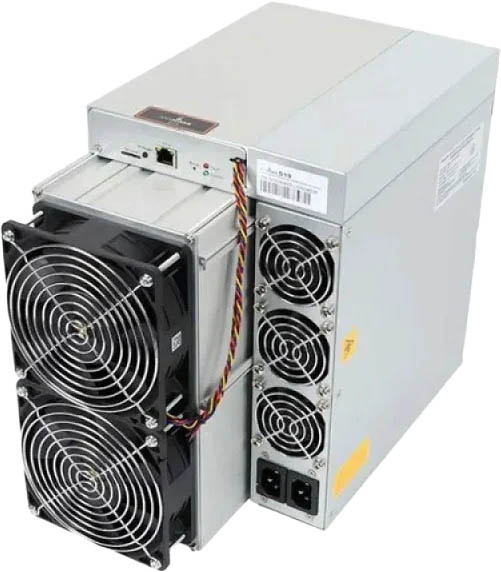
ASIC Bitmain Antminer KS3
Typical specifications include:
-
Algorithm: KHeavyHash
-
Hashrate: ~8.3–8.5 TH/s
-
Power Consumption: ~3,000–3,200 W
-
Energy Efficiency: ~0.36–0.38 J/GH
-
Cooling: Air-cooled
-
Release period: 2023
ASIC Bitmain Antminer KS5
The Antminer KS5 represented a massive generational leap, offering more than double the hashrate of the KS3 with improved efficiency. It quickly became the new standard for professional Kaspa mining.
This model was widely deployed in large farms during Kaspa’s rapid growth phase.
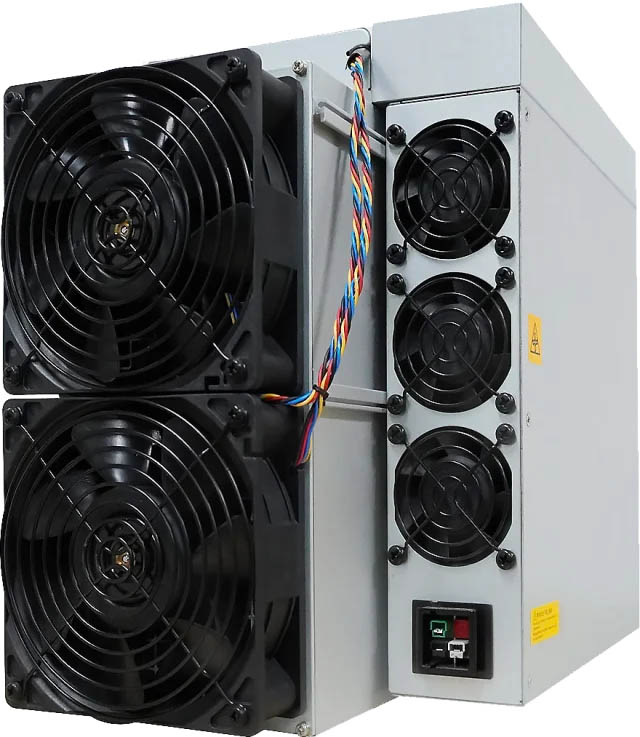
ASIC Bitmain Antminer KS5
Typical parameters include:
-
Algorithm: KHeavyHash
-
Hashrate: ~20 TH/s
-
Power Consumption: ~3,000–3,200 W
-
Energy Efficiency: ~0.15–0.16 J/GH
-
Cooling: Air-cooled
-
Release period: 2024
ASIC Bitmain Antminer KS5 Pro
The Antminer KS5 Pro is an optimized and higher-binned version of the KS5. It focuses on higher output while maintaining similar power draw, resulting in significantly better efficiency.
This model is preferred by miners aiming for maximum hashrate per rack unit.
Typical specifications include:
-
Algorithm: KHeavyHash
-
Hashrate: ~21–22 TH/s
-
Power Consumption: ~3,150–3,300 W
-
Energy Efficiency: ~0.14–0.15 J/GH
-
Cooling: Air-cooled
-
Release period: 2024
ASIC Bitmain Antminer KS7
The Antminer KS7 is the most powerful and advanced model in the KS lineup. It is designed for large-scale industrial mining operations and delivers an unprecedented hashrate for the KHeavyHash algorithm.
This model dramatically increased Kaspa network difficulty shortly after release.
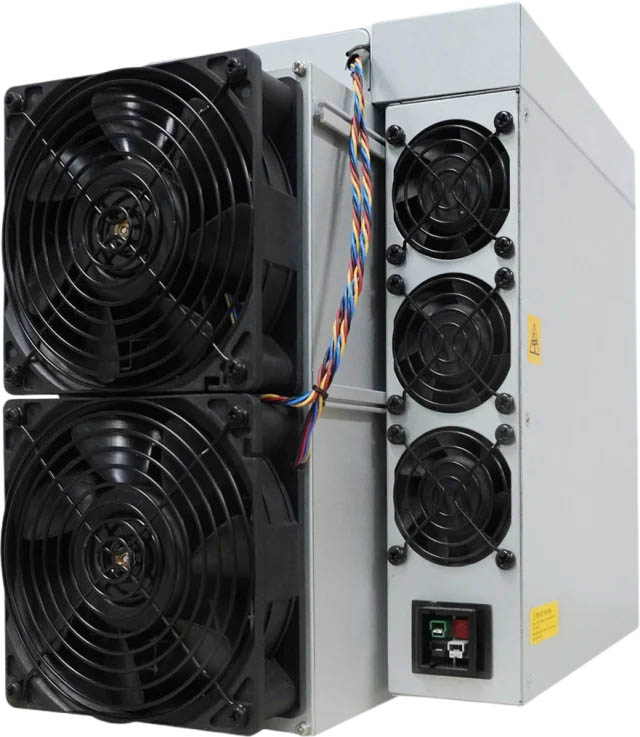
ASIC Bitmain Antminer KS7
Typical technical profile includes:
-
Algorithm: KHeavyHash
-
Hashrate: ~40–42 TH/s
-
Power Consumption: ~3,500–3,800 W
-
Energy Efficiency: ~0.09–0.10 J/GH
-
Cooling: Air-cooled
-
Release period: 2025
Mining Pools for Kaspa and KS ASIC Series
Due to Kaspa’s fast block times and high network hashrate, mining pools are the standard way to mine with KS-series hardware.
The most commonly used Kaspa mining pools include:
-
Kaspool
-
WoolyPooly
-
HeroMiners
-
F2Pool (Kaspa)
Electricity Costs and Operational Strategy ASIC miner
Because KS miners are extremely hashrate-dense, electricity cost plays a decisive role in long-term profitability. Even small differences in power pricing significantly impact ROI.
Typical electricity price ranges include:
-
Low-cost mining regions: ~0.04–0.06 USD/kWh
-
Standard hosting facilities: ~0.07–0.10 USD/kWh
-
High-cost regions: ~0.12+ USD/kWh
Due to rapid difficulty increases, KS miners benefit greatly from early deployment and aggressive cost optimization.
Optimization and Firmware Tuning ASIC miner
Operators often tune KS-series miners to improve efficiency or reduce power consumption during periods of reduced profitability.
Common optimization techniques include:
-
Undervolting
-
Frequency tuning
-
Improved airflow design
-
Immersion cooling retrofits
User Experience ASIC Antminer KS
User feedback on the KS series reflects the volatile nature of Kaspa mining. Early adopters reported extremely fast ROI, while later buyers faced rapidly declining profitability.
Common user observations include:
-
Very stable hashrate
-
High heat output
-
Loud operation under full load
-
Strong dependence on market timing
Common Failures and Maintenance Considerations ASIC Antminer KS
KS-series miners operate at high power density, which introduces typical ASIC wear patterns.
Most commonly reported issues include:
-
Fan degradation
-
Hashboard thermal stress
-
PSU overload under unstable power conditions
-
Dust accumulation impacting cooling efficiency
Repairability is generally good, with spare parts available for most models.
Profitability and ROI Expectations Bitmain Antminer KS
ROI for KS-series miners varies dramatically depending on purchase timing and electricity cost. Early buyers often achieved ROI in months, while later deployments require longer horizons.
General profitability trends include:
-
Rapid ROI early in lifecycle
-
Steep profitability decline as new models launch
-
Strong resale market during bull cycles
Is the ASIC Bitmain Antminer KS Series Worth It?
The Bitmain Antminer KS series is a prime example of next-generation ASIC mining focused on a single high-performance network. It offers unmatched efficiency for Kaspa mining but comes with higher risk due to rapid difficulty growth.
For miners with cheap electricity, fast deployment capability, and strong market timing, the KS series can deliver outstanding returns. For long-term conservative miners, careful ROI analysis is essential.