Bitmain Antminer KA3
|
ASIC Model series:
|
ASIC Release: |
Hashrate:
|
ASIC Power:
|
|
ASIC Algo:
|
 Bitmain Antminer KA3 Bitmain Antminer KA3 |
Jun 2024 |
173Th/s
|
3287W
|
 |
Kadena
|
|
Bitmain Antminer KA3 |
Sep 2022 |
166Th/s
|
3154W
|
|
Kadena
|
Modified ASIC Firmware for Antminer KA series
(5-10% improvement) download here
Kadena (KDA) is one of the most performance-centric Layer-1 cryptocurrencies, offering scalable throughput thanks to its proprietary Chainweb mining algorithm—a multi-chain proof-of-work system. For miners seeking profitability in 2026 and beyond, choosing the right hardware and mining pool configuration is critical. Among today’s top mining rigs for Kadena are the Bitmain Antminer KA3 series ASIC miners, designed to deliver high hash power, efficiency, and long-term performance.
This guide will walk you through:
-
What Kadena mining is
-
Coins you can mine with KA3 miners
-
Algorithmic difficulty and trends
-
Best pools for Kadena mining
-
Detailed technical specifications of KA3 miners
-
User experiences and issues
-
Warranty, repairability, and longevity
What Is Kadena Mining? Antminer KA3
Before exploring hardware, it’s essential to understand the mining ecosystem behind Kadena.
Kadena uses a unique Chainweb proof-of-work (PoW) protocol. Unlike Bitcoin’s single-chain PoW, Chainweb operates multiple parallel chains that share consensus. This structure increases throughput and hash security. The mining algorithm itself requires high bandwidth and parallel processing, making ASIC hardware especially relevant for efficiency and profitability.
Because the algorithm is PoW, miners compete to solve cryptographic hashes, and the network dynamically adjusts difficulty to maintain block times.
Which Coins Can You Mine With ASIC Antminer KA3?
While the primary coin mined with the KA3 is Kadena (KDA), the machine also supports related tokens leveraging the same mining algorithm.
Here’s a short overview:
-
Kadena (KDA) – primary coin
-
Any token using identical Chainweb PoW variant (rare, but possible via forks)
-
Testnet mining (non-profit environment)
Miners cannot use the KA3 to mine SHA-256 coins like Bitcoin or SHA-3 coins like Ethereum Classic—its firmware and ASIC design are strictly optimized for Kadena’s hashing method.
Kadena Network Difficulty & Profitability Trends ASIC Antminer
The Kadena network adjusts its mining difficulty periodically based on total hash power. Since 2024, difficulty has trended upward as more miners adopt high-performance rigs like Bitmain’s KA3.
Growing difficulty means:
-
Higher electricity costs per mined token
-
Small or inefficient miners struggle to turn profit
-
Larger, well-cooled setups remain competitive
Profitability depends heavily on:
-
Electricity cost per kWh
-
Pool fees
-
Mining difficulty participation
-
Block rewards and market price of KDA
Miners often use profitability calculators to estimate returns based on current difficulty and market price.
Top Mining Pools for Kadena ASIC Antminers
Choosing a stable, low-fee pool can significantly impact earnings.
Below are popular Kadena mining pools supported by the KA3 series.
Recommended Kadena Pools
-
Ethermine Kadena Pool – Large global pool with stable uptime
-
KrakenPool – Kadena-focused group with adjustable payment options
-
F2Pool – Multi-coin pool with Kadena support
-
Luxor Mining – Professional service with detailed stats
Each pool will have different UI, fee structures, and payout thresholds. Always verify minimum payout and server latency before committing large hash power.
ASIC Bitmain Antminer KA3 Series
Here’s a narrative overview of the Bitmain KA3 series before the technical list.
Bitmain’s Antminer KA3 line was developed specifically to handle the Kadena algorithm with maximal efficiency and stable long-term operation. Built with custom hash boards and optimized cooling, these models aim to balance hashrate against power draw for profitability in competitive mining environments.
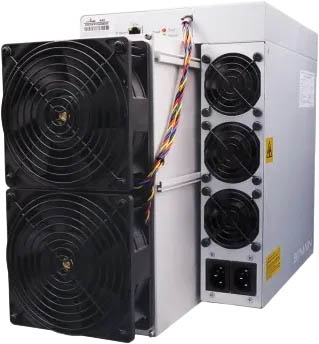
BitmainAntminer KA3
Key Technical Specifications
-
Release Date: Q4 2023 – Early 2024
-
Hash Rate: up to 260 TH/s (model dependent)
-
Power Consumption: 2500W to 3000W
-
Algorithm: Kadena Chainweb PoW
-
Efficiency: ~9.6–11.5 J/TH
-
Network Connectivity: Ethernet
-
Cooling: Dual fans
Model breakdown:
-
Antminer KA3-260: ~260 TH/s @ ~2850 W
-
Antminer KA3-210: ~210 TH/s @ ~2500 W
-
Antminer KA3-180: ~180 TH/s @ ~2300 W
These high hash rates position KA3 miners as competitive players in Kadena mining pools, as long as electricity costs remain below profitability thresholds.
KA3 Miner Power, Efficiency & Practical Costs
In real mining setups, electricity is often the largest cost. KA3 miners draw high power, so efficiency matters:
-
Good electricity rates (< $0.06 USD/kWh) can mean profitability
-
Higher rates (> $0.10 USD/kWh) drastically reduce margins
-
Heat output requires adequate ventilation and cooling
Because Antminer KA3 models produce significant heat and noise, placement in climate-controlled environments is strongly recommended to maximize uptime and hardware lifespan.
User Experiences With ASIC Antminer KA3
Many miners report generally positive performance with the KA3 series, thanks to:
-
Solid hash output
-
Stable firmware specific to Kadena
-
Easy pool configuration
However, there are some common concerns:
-
Heat and noise: Intensive cooling required for sustained operation
-
Power draw: High electricity demand can erode profit in expensive regions
-
Firmware quirks: Early batches may require updates for optimal pool connection
-
Supply chain pricing: Initial high cost impacts ROI timeline
Experienced miners advise proactive firmware checks and monitoring hash boards for stability. Community forums are essential sources for successful tuning settings.
Warranty, Repairs & Longevity of ASIC KA3 Miners
Bitmain offers standard warranties on new KA3 miners (typically 180 days). Warranty considerations:
-
High wear may void warranty
-
Improper cooling or heat damage often excluded
-
Power surges damage frequently not covered
Many miners opt for extended warranties or third-party insurance plans for larger rigs, which can save costs over long-term deployments.
How to Maximize Kadena Mining Profitability
To make the most of your KA3 setup:
-
Choose a pool with low fees and reliable payouts.
-
Run miners at stable temperatures (~25–30°C ambient).
-
Monitor hash rate and rejected shares regularly.
-
Reinvest rewards into upgrades or additional machines.
-
Track Kadena market prices for timing compensation strategies.
Profitability can be volatile—make sure you adjust settings and costs regularly.
Kadena offers a unique and high-performance mining ecosystem, and Bitmain’s Antminer KA3 line provides the power necessary to compete. By understanding network difficulty, pool selection, hash rates, and practical cost factors, miners can make informed decisions and optimize their setups for consistent returns. While the initial investment and operational costs are significant, a well-configured KA3 rig in a low-cost power environment can be a profitable addition to any miner’s portfolio.